
Burning a digital letter can mark the end of a writing session. You put something into words, choose an ending, and watch a visual version of the page disappear. The meaning comes from the choice you make; an animation cannot guarantee emotional closure.
You can try a closing ritual because it feels appropriate, without treating it as a treatment or a test of whether you have moved on.
What are you choosing to finish?
Be specific. You might be finishing tonight's argument on the page, a letter you do not want to reread, or one attempt to explain an experience. That is smaller than deciding you will never feel the feeling again.
Before choosing Burn, try: “I am ending this page for today. I am not requiring myself to…” Complete it with “forgive,” “forget,” “stop missing them,” or whatever pressure you notice.
What does the research actually say?
A 2024 study tested writing about an anger-provoking experience and physically disposing of the paper. The experiments found reduced self-reported anger after disposal compared with keeping the paper. They studied paper disposal after a controlled provocation, not an app's burn animation or long-term breakup recovery. Read Kanaya and Kawai's study.
That offers related research context for symbolic disposal. It does not establish that burning a digital letter has the same effect, or that the Rescript feature has been clinically validated.
A simple digital closing ritual
- Write one thing you have been holding back.
- Stop and check whether you want to keep the exact words.
- If you choose a closing action, read its confirmation carefully.
- Watch the ending only if you want to.
- Return to one ordinary activity outside the writing session.
Do not use a closing action for something you need to preserve, such as an important record. If you are unsure, keeping the letter gives you more time to decide.
How Burn works in Rescript
Rescript's Letters flow offers Keep, Burn, and Release. The current Burn scene uses the letter's words and an attached photo when present. Release uses a different visual ending. Neither sends the letter to the person you addressed.
A disappearing page is not, by itself, a technical promise about every backup, log, or data-retention system. Check the in-app confirmation and the Privacy Policy for those questions. Do not infer data-erasure guarantees from a visual effect.
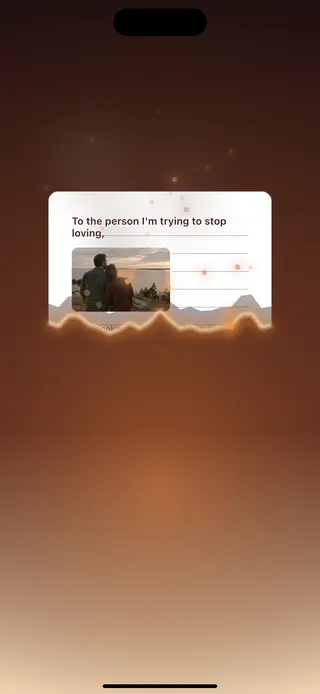
Rescript product demonstration. The scene is a visual closing ritual.
You can choose a quieter ending
Closing the notebook, saving a letter, or deciding to return another day can be enough. You do not need actual fire, and you do not have to destroy meaningful words to make the exercise count.
For the differences between the writing practices, read the FAQ. For support after an intense entry, try a gentle way to finish writing.